 Image: Genshin Impact (Wikipedia)
Author: VANAS
The Incredible Visuals of Genshin Impact
Genshin Impact arrived as a surprise to many: a free-to-play action RPG with a sprawling open world and art that reads like a living painting. But its visuals are not merely pretty — they are the product of deliberate art direction and technical decisions that shape how players explore, remember, and emotionally connect with the world. This post breaks down what makes Genshin's visuals so compelling: the art language, lighting and atmosphere, environmental design, character presentation, technical systems, and how players can capture that beauty themselves.
A clear, consistent art direction
At its core, Genshin Impact uses a stylized, painterly aesthetic that borrows from anime, studio illustration and classical landscape painting. The strengths of this approach are clarity and memorability: bold silhouettes, readable shapes, and a controlled palette let players parse scenes quickly while still rewarding closer inspection.
- Palette as mood: each region leans into a distinctive color story (verdant greens for pastoral areas, icy blues for arctic zones, warm golds for desert or festival locales). These choices guide player expectations and emotional tone.
- Simplified detail: textures are painterly rather than photoreal, which reduces visual noise and keeps focus on composition and gameplay.
- Silhouette-first design: landmarks and set pieces use strong silhouettes so players can identify locations at a glance from afar.
This consistency allows the team to push visual flourish without sacrificing readability — a key requirement for open-world traversal and combat.
Lighting, atmosphere, and cinematic composition
Lighting is where Genshin’s world truly breathes. A layered approach — skyboxes, volumetric fog, bloom, and dynamic shadows — creates depth and atmosphere across times of day and weather states.
- Dynamic day-night cycles and soft color grading give each hour a cinematic identity.
- Volumetric fog and atmospheric scattering impart depth on distant mountains and valleys, turning environmental scale into palpable drama.
- Post-processing (bloom, LUTs, subtle film grain) unifies the scene and helps character models sit naturally within environments.
The result is often photographic: carefully framed vistas, dramatic backlighting, and soft rim lights that make characters and objects pop against vast backgrounds.
Environment and world-building through detail
Genshin’s maps are layered with environmental storytelling. Small props, destructible foliage, particle-driven effects, and contextual animations make the world feel curated rather than procedurally bland.
- Landmark design binds the map together — towers, shrines and bridges act as navigational beacons and narrative signposts.
- Procedural elements (grass sway, falling leaves, drifting ash) are tuned to avoid repetition and to sell natural motion across large areas.
- Interactive set dressing — such as cooking stations, torches, and movable objects — enriches exploration and creates memorable moments.
These details are balanced to keep the world lively without crowding the gameplay or masking important affordances.
Characters and expression
Character visuals in Genshin are crafted to be iconic at any scale: from distant silhouettes when climbing a cliff to close-up animations during cutscenes. Thoughtful rigging, hand-painted textures, and carefully directed animation give characters personality and presence.
- Costume and silhouette: each character’s outfit reads clearly in motion and helps define role and origin.
- Facial rigging and emotes: tight animation loops and expressive emotes make small interactions feel heartfelt and alive.
- VFX language: every character’s abilities have signature visual cues — color keys, shapes, and particle behaviors — that communicate mechanics and identity.
The cohesion between character art and world art strengthens immersion and supports both mechanical clarity and story beats.
Technical artistry: shaders, particles, and optimization
Behind the painterly surfaces sit modern rendering techniques adapted for scale and cross-platform performance. Genshin balances fidelity with frame-rate targets through thoughtful systems engineering.
- Custom shaders: stylized shaders approximate hand-painted lighting while remaining performant on mobile hardware.
- Particle systems: layered particle emitters create weather, elemental auras and impact effects that read at multiple distances.
- LODs and culling: models, textures and effect density adjust with distance to preserve battery life and framerates on phones.
- Baked lighting and probes: a hybrid of real-time lighting with baked ambient contributions provides depth without heavy runtime cost.
These technical choices let the game scale gracefully from low-end phones to high-end PCs while maintaining a consistent visual identity.
Animation, camera, and cinematic moments
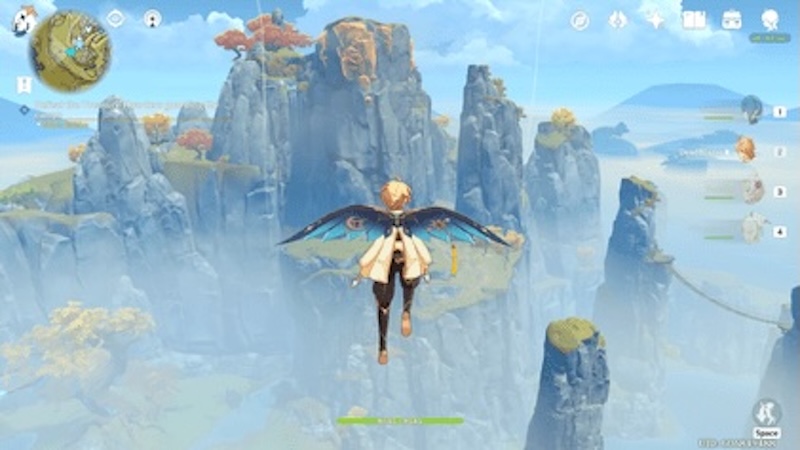
Movement and camera framing are part of the visual language. Climbing animations, gliding sequences, and the game’s slow, thoughtful camera pans turn traversal into a sequence of tableaux.
- Cinematic cameras: scripted pans and zooms emphasize discovery and reward exploration with postcard-worthy views.
- Motion design: fluid transitions between states (run → glide → land) keep action readable and visually pleasing.
Small touches like slow-motion on impactful hits or subtle camera shakes on explosions heighten the emotional weight of moments without resorting to overuse.
Seasonal content and color refreshes
Genshin regularly introduces seasonal events and limited-time regions with unique art assets and palettes. These refreshes keep the visual experience fresh and offer artists a sandbox for stylistic experiments that sometimes inform permanent content.
In-game photography: tips for capturing the world
Genshin’s Photo Mode and naturally photogenic world invite players to capture and share. A few practical tips:
- Golden hour works: try screenshots near dawn/dusk equivalents in-game for warm, cinematic tones.
- Rule of thirds: place landmarks or characters off-center for stronger composition.
- Use depth-of-field and focal compression: focus on your subject and let the background soften into a painterly bokeh.
- Stage the shot: pose characters, align the sun for rim-lighting, and hide UI for clean captures.
Players and content creators should treat the world as a living studio — move, wait for the wind, frame and shoot.
The interplay of design and performance
What makes Genshin’s visuals sustainable is an engineering loop: art direction suggests effects, engineers prototype shaders and systems, and optimization informs art budgets. The game’s longevity owes as much to this collaborative pipeline as to any single graphical feature.
Key engineering patterns:
- Graceful scalability: systems designed with multiple quality tiers from the outset.
- Asset streaming and memory budgets: careful streaming keeps load times reasonable and memory use predictable.
- Tooling for artists: in-house editors, preview modes, and material libraries speed iteration and ensure consistency.
This cross-discipline cooperation allows visual ambition without sacrificing broad accessibility.
Why it matters: visuals as storytelling and player memory
Great visuals do more than dazzle — they create place and memory. When a player remembers a frozen waterfall, a lantern-lit alley, or a mountain silhouette, that memory is built on composition, color, sound and interaction working together. Genshin’s success is that it gives players a world worth remembering and returning to.
Final thoughts
Genshin Impact’s visuals are the result of a clear artistic vision married to pragmatic technical design. Whether you’re an artist, developer or photographer, there’s something to learn from how its world is composed, lit and optimized at scale. If you want to capture that same spirit, focus first on a strong art language, then build the tools and systems to scale it efficiently.